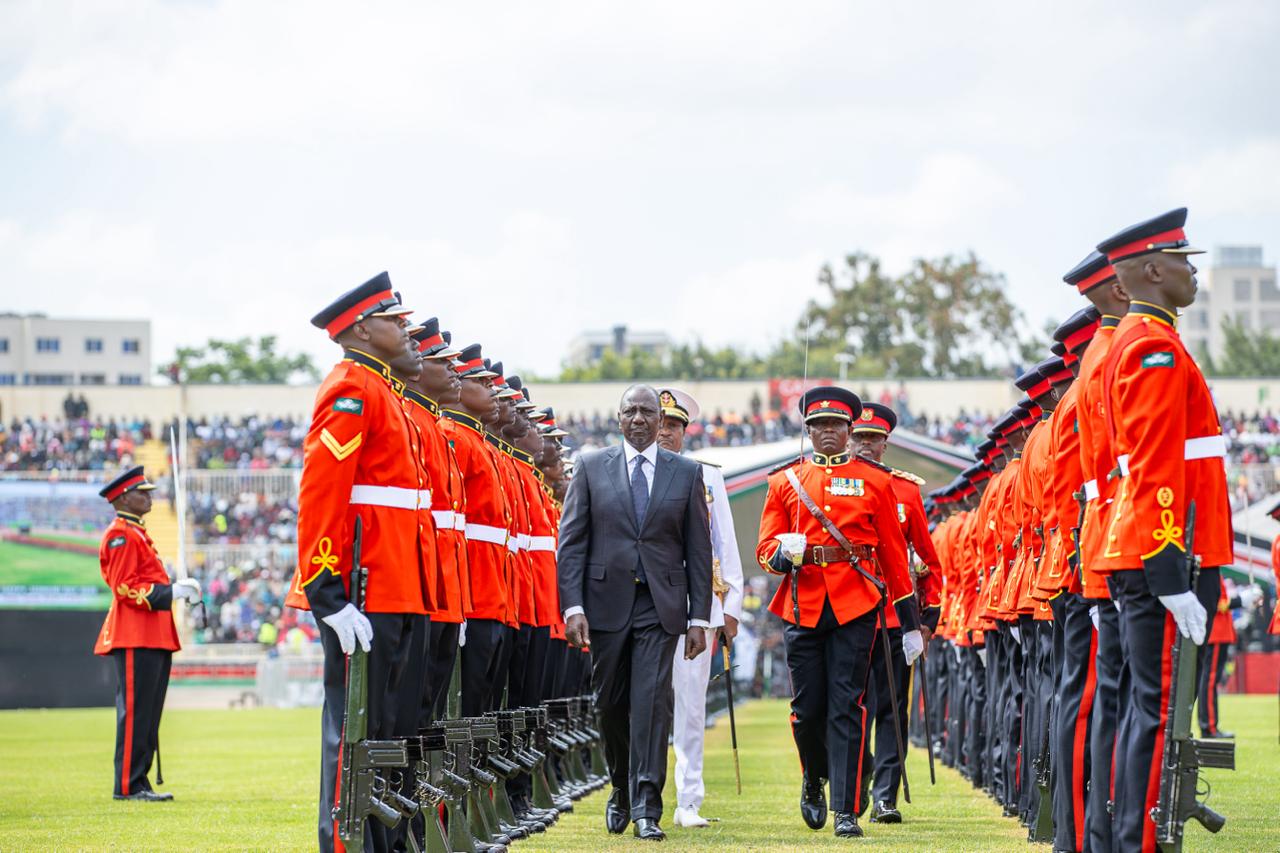
President William Ruto has announced that nearly 500,000 students are already benefiting from Kenya's newly introduced student-centered funding model, a transformative initiative designed to reduce the financial burden on families and enhance access to higher education.
Speaking at the Jamhuri Day celebrations at Nyayo Stadium, Ruto described the model as a key step towards ensuring fairness and equal opportunity in the education sector, ensuring that scholarships and loans are distributed based on both need and merit.
"The reform has opened opportunities for students who under previous systems would have been excluded by policies that failed to recognize them," the President said, emphasizing that the changes represent a major shift in how financial support is provided to learners.
Ruto explained that the overhaul of the system comes at a crucial time, as Kenya's education sector continues to recover from a period of significant challenges.
"Classrooms were overcrowded. Many universities were technically insolvent and teachers were overwhelmed," he remarked. However, he added that over the past three years, the government has made remarkable strides toward improving the sector.
To further bolster the education system, Ruto revealed that 76,000 teachers have already been recruited, with plans to increase that number to 100,000 by next month,marking the largest teacher recruitment drive in Kenya’s history.
Additionally, the government has already constructed 23,000 new classrooms and is in the process of building another 1,600 laboratories across the country to support learning and scientific inquiry.
The President reiterated that the goal of the reforms is to ensure students are placed at the center of the education system, allowing them the freedom to choose career paths based on their individual talents and aspirations.
“For the first time in our history, scholarships and loans now follow need and merit, ensuring that every deserving student has a chance and a just and equal opportunity to pursue their dreams,” he stated.
The new model, introduced in May 2023, replaces the Differentiated Unit Cost (DUC) system and is aimed at expanding access to university and TVET education. It directs financial support based on students' financial circumstances through a process known as the Means Testing Instrument (MTI).
This instrument assesses household income, family size, and region to determine how much financial support each student will receive. The most vulnerable students, according to the system, are entitled to the highest level of government support, minimizing the financial burden on their families.
However, the new funding model has not been without challenges. Some students have raised concerns about being misclassified as non-needy, while others have encountered difficulties with the application system. Legal disputes regarding the model’s constitutionality were also raised but have since been resolved, with the Court of Appeal allowing the model to continue.
Despite these hurdles, the government remains committed to refining the MTI, improving the application process, and enhancing the appeals system to ensure that all eligible students have access to the support they need. "We are determined to make this system work, so that no deserving student is left behind," President Ruto concluded.































Comments
Sign in with Google to comment, reply, and like comments.
Continue with Google